
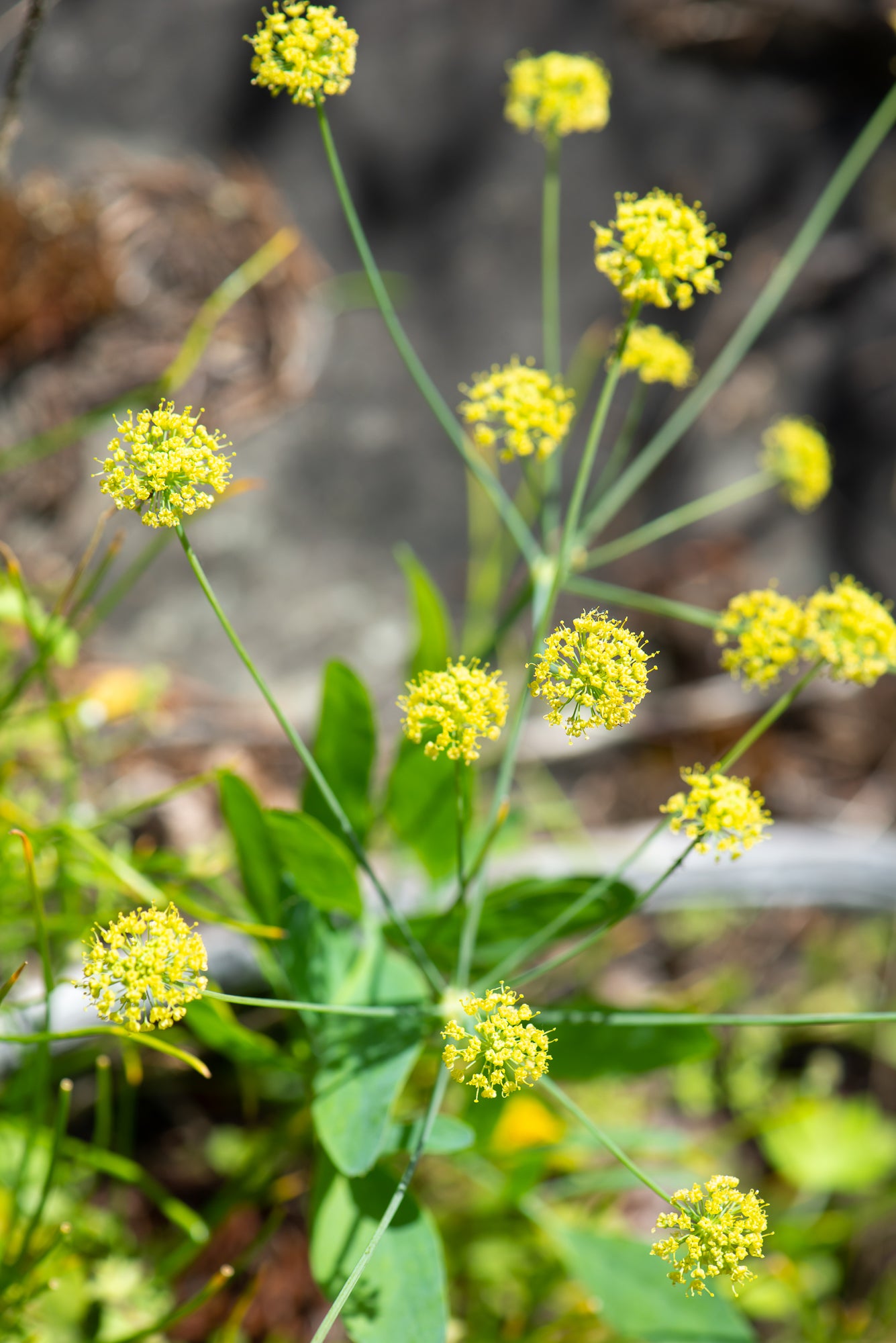


Barestem Desert Parsley (Lomatium nudicaule)
Barestem desert parsley is an aromatic perennial member of the carrot family that thrives in dry, sunny areas. It is a culturally significant plant for many First Nations, with medicinal, food, and ceremonial uses. The compound umbels of small yellow flowers attract a host of pollinators and beneficial insects, and the sturdy stem grows up to 3' tall, providing structural interest in the garden that persists into winter. All parts of this plant are edible, with a scent and taste similar to celery. Once established, barestem desert parsley is very drought tolerant, making it an excellent choice for xeriscaping.
Sun Exposure: Full sun to light shade
Soil & Moisture: Well-drained, seasonally dry soil. Can grow in sandy soils. Water to establish; once established, it is drought tolerant.
Mature Size: 1'-3' tall
Bloom Time: Spring to early summer
Edible: Yes (roots, shoots, leaves, flowers, seeds). * NOTE: Edibility of wild plants often depends on the preparation of the plant. Always do your own research prior to consuming wild plants and eat at your own risk.
Wildlife Value: Host plant for anise swallowtail butterfly larvae. Attracts bees, butterflies, and other pollinators.
Native Range & Habitat: Found in dry, open areas at low to middle elevations: shrub-steppe, dry meadows, rocky slopes, and open pine forests. Occurs in the PNW from British Columbia south to California, and east to Utah and Nevada.
Other Names: Barestem biscuitroot, q’uxmin (Hul'q'umi'num')
Choose options