
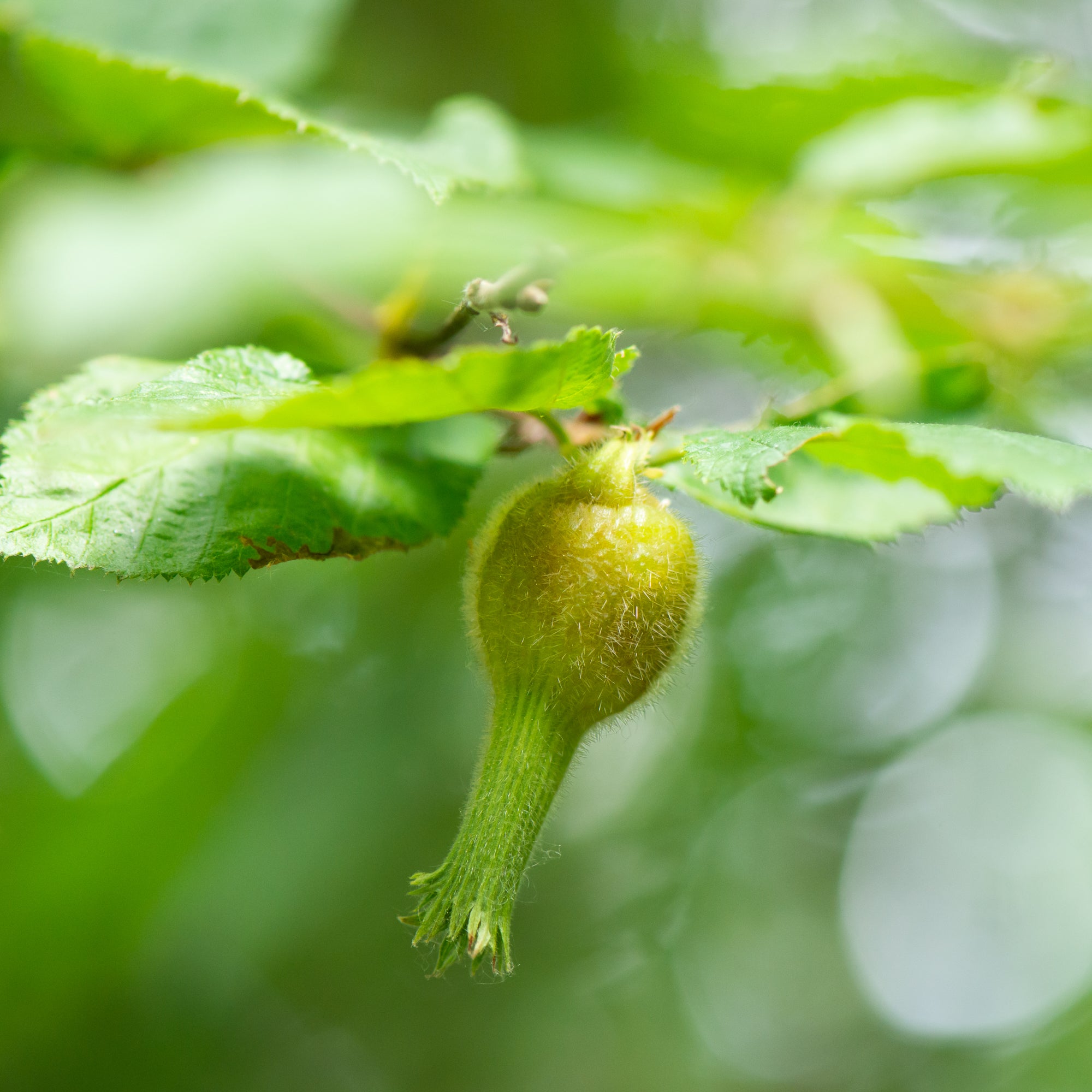
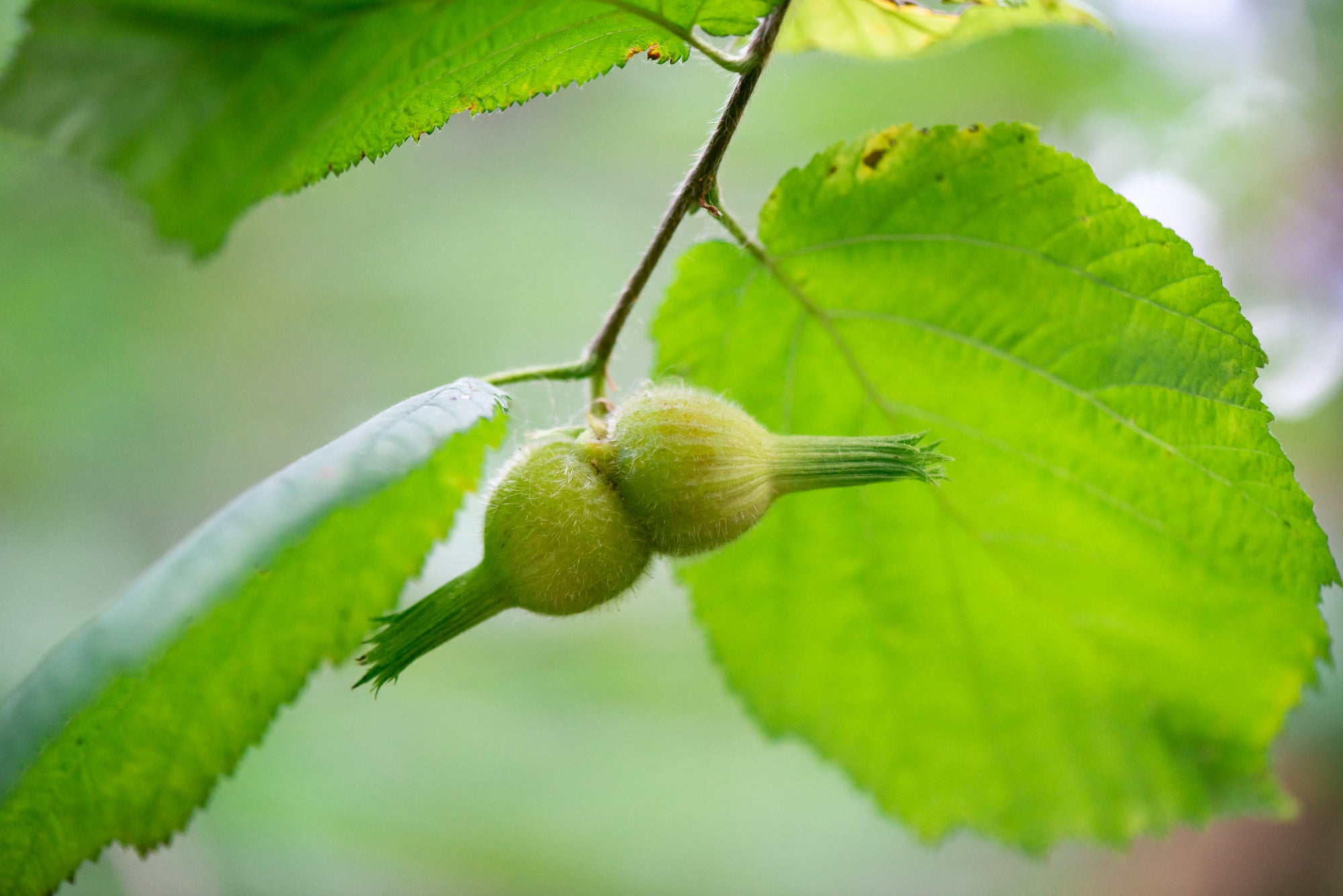
Beaked Hazelnut (Corylus cornuta subsp. californica)
Beaked hazelnut is an easy to grow, large deciduous shrub or small tree that produces delicious, edible nuts. It typically takes the form of a tall, multi-stemmed shrub with arching branches that spreads by suckers, although it can be pruned into a more tree-like form. It has smooth bark, and soft, velvety, oval-shaped leaves that turn bright yellow in the fall. Showy, pendulous male catkins and small red female flowers bloom in late winter before the leaves emerge, providing ornamental value in the garden when most other plants are dormant. Beaked hazelnut is an excellent plant for hedgerows, food forests and wildlife habitat, and is useful for erosion control on slopes.
To produce nuts, it is recommended to plant at least 2 genetically different plants in close proximity, as they are wind pollinated (each beaked hazelnut plant that we sell is grown from seed, so they are all genetically different). Growing multiple plants will also increase your chance of getting a nut harvest before the squirrels get them all! While beaked hazelnut can handle shade, it will produce more nuts in full sun with ample moisture.
Sun Exposure: Full sun to partial shade
Soil & Moisture: Moist to seasonally dry, well-drained, humus-rich soil. Tolerates clay soils. Drought tolerant once established if properly sited.
Mature Size: up to 20' tall and wide depending on conditions, usually not more than 8' tall
Bloom Time: January to March
Edible: Yes (nuts)
Wildlife Value: The nuts are eaten by wildlife, including squirrels, chipmunks, rodents, jays, and black bears. The leaves are eaten by deer, moose, and elk. Provides cover and nesting sites for birds.
Native Range & Habitat: Grows best in moist, well-drained sites, in open forests, forest edges, meadows, alongside streams, and on damp, rocky slopes. Subspecies 'californica' occurs at low to middle elevations from British Columbia south to California, mostly west of the Cascade Mountains, while subspecies 'cornuta' occurs east to the Atlantic Coast.
Other Names: ḵ’p’ax̱w (Sḵwx̱wú7mesh sníchim), western hazelnut, California hazelnut
Choose options