

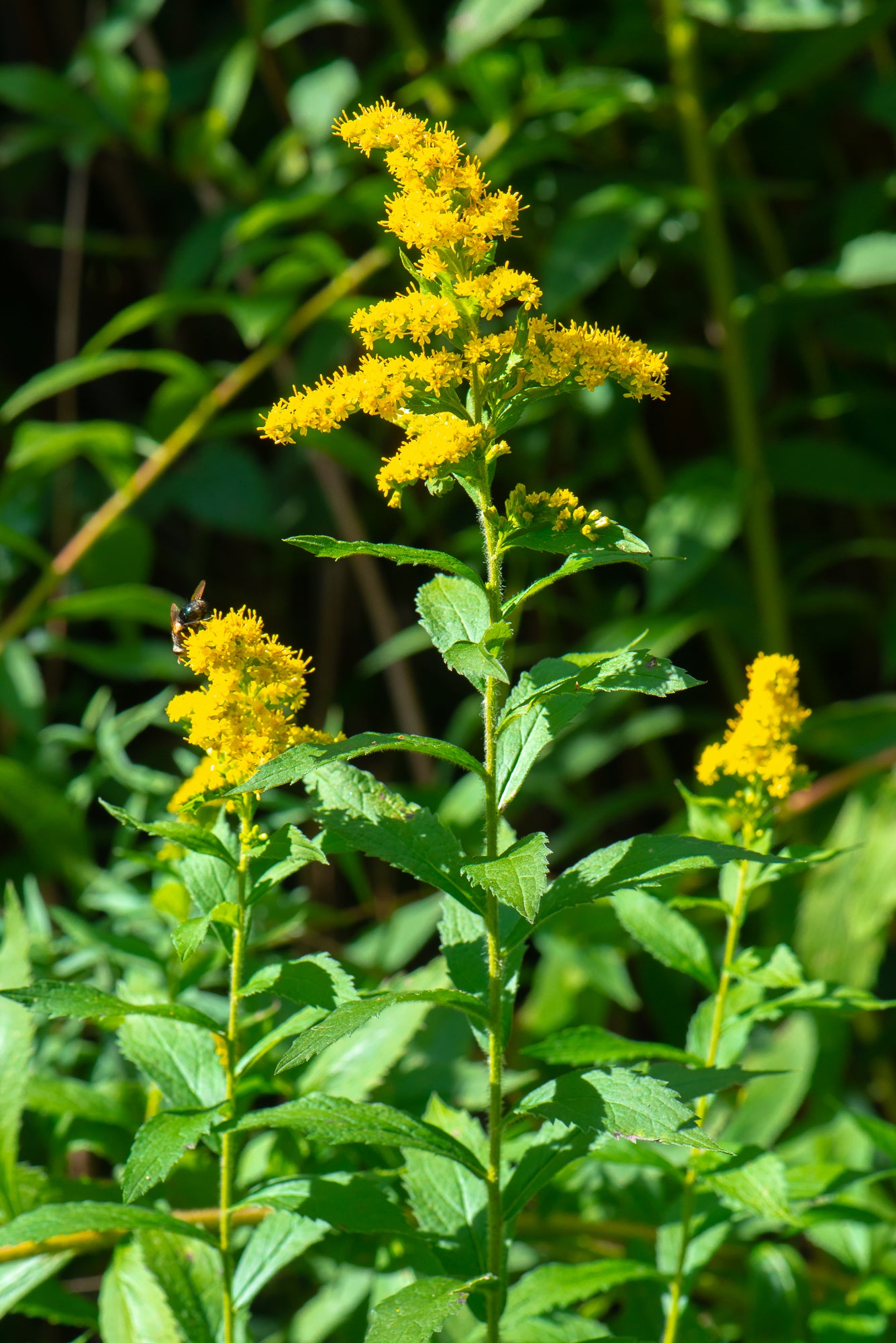
Goldenrod (Solidago lepida)
Goldenrod is a late-blooming, showy perennial that is a magnet for a diverse array of pollinators and beneficial insects, at a time when most other flowers have already faded away. Clumps of tall stems with lance-shaped leaves are topped with attractive spikes of golden flowers that provide an important late-season source of pollen and nectar for bees, butterflies, and hummingbirds. When the plants go to seed, they continue to provide food for birds into the winter. Goldenrod is rhizomatous and can spread vigorously, especially in a setting with moist, rich soil; it may not be suitable for smaller gardens. A great choice for pollinator meadows!
Sun Exposure: Full sun to part shade
Soil & Moisture: Grows in a variety of soil types, prefers moist soil
Mature Size: 3'-5' tall. Spreads vigorously by rhizomes, especially in moist soil
Bloom Time: August to October
Edible: No
Wildlife Value: Important late-season nectar and pollen source for many insects. Attracts beneficial insects and many pollinators. Butterfly host plant. Birds eat the seeds.
Native Range & Habitat: Common in open woods, meadows, riparian areas, disturbed sites at low to high elevations. Widespread.
Other Names: Western Canada goldenrod, western goldenrod
Choose options