

Pacific Crabapple (Malus fusca)
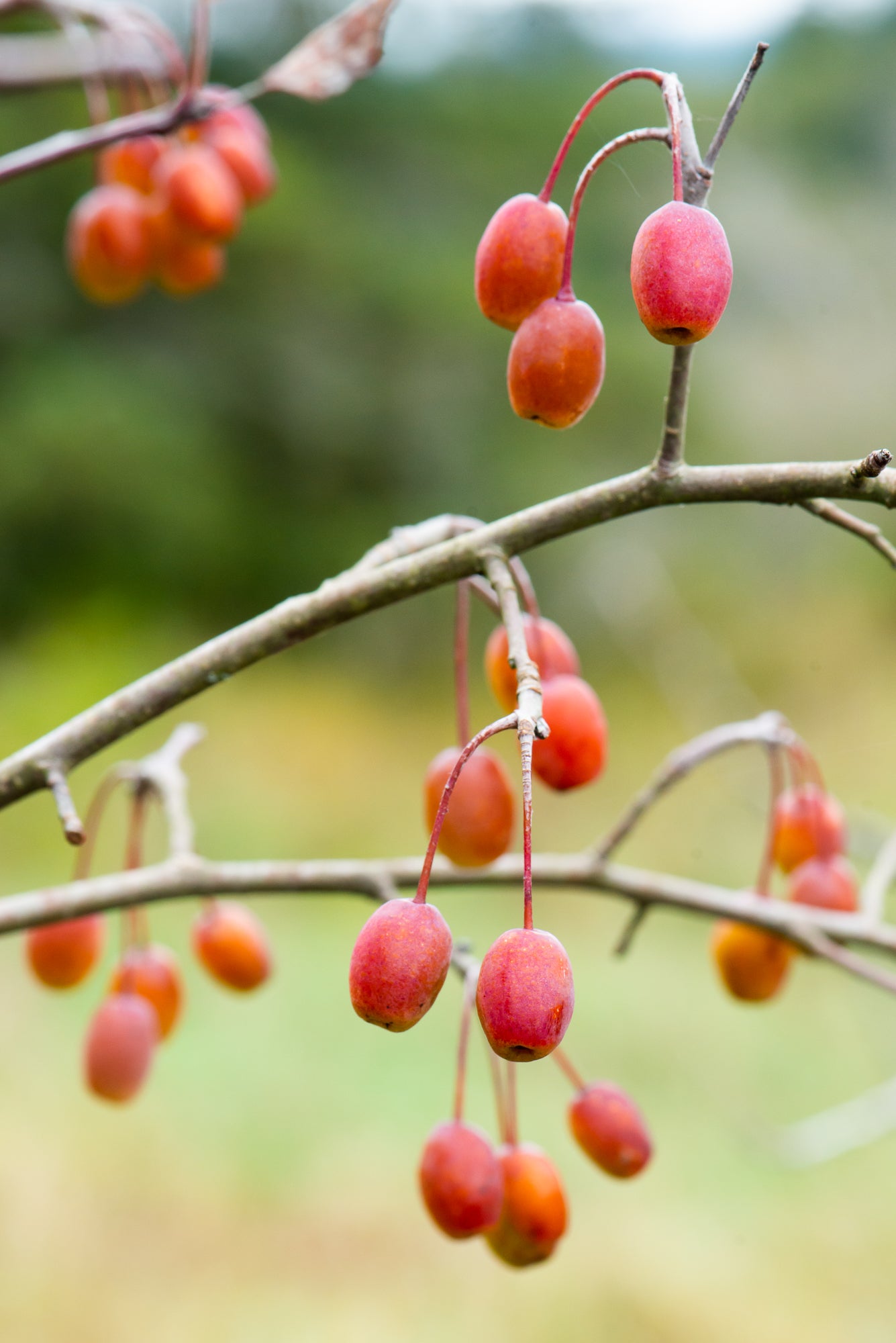
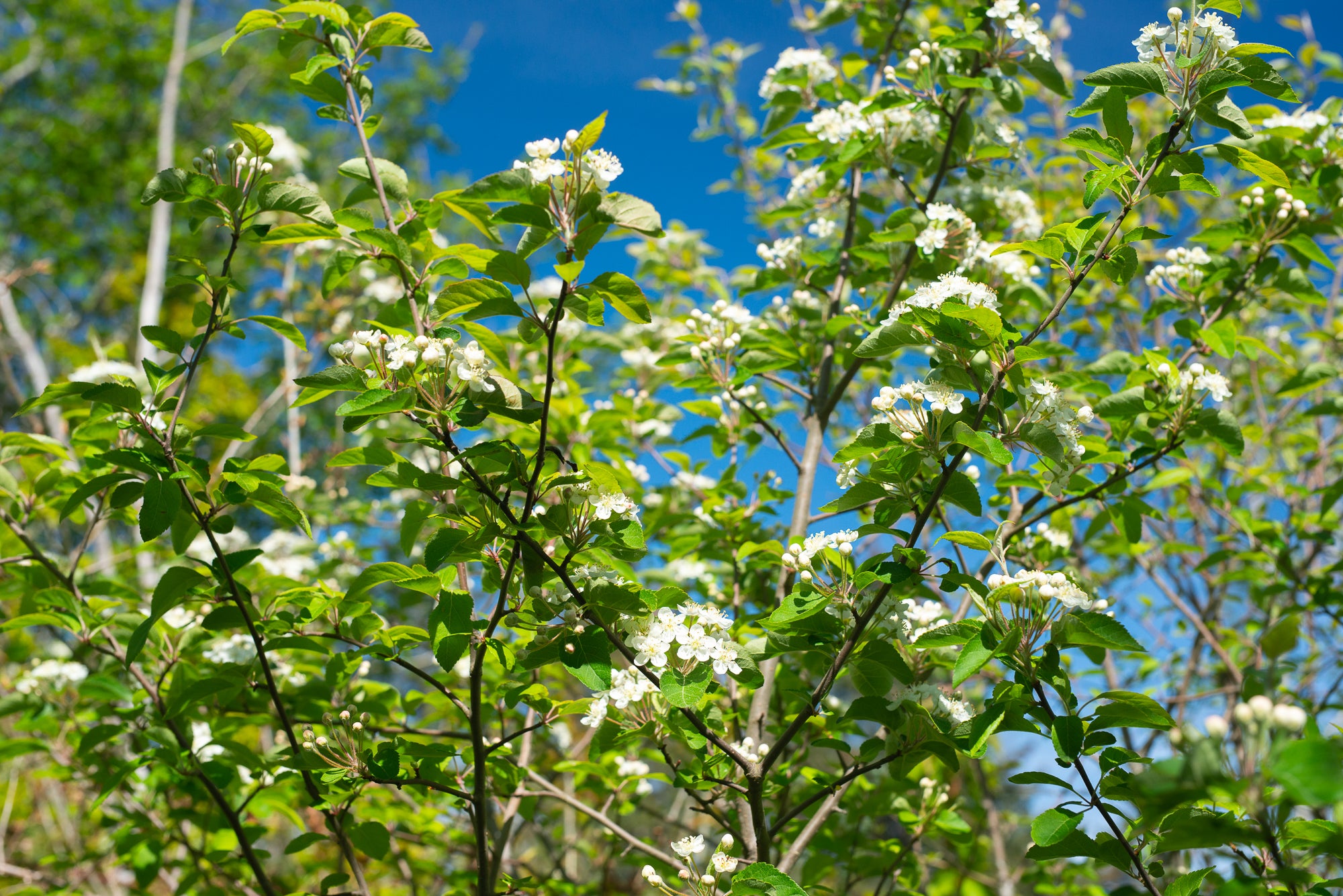
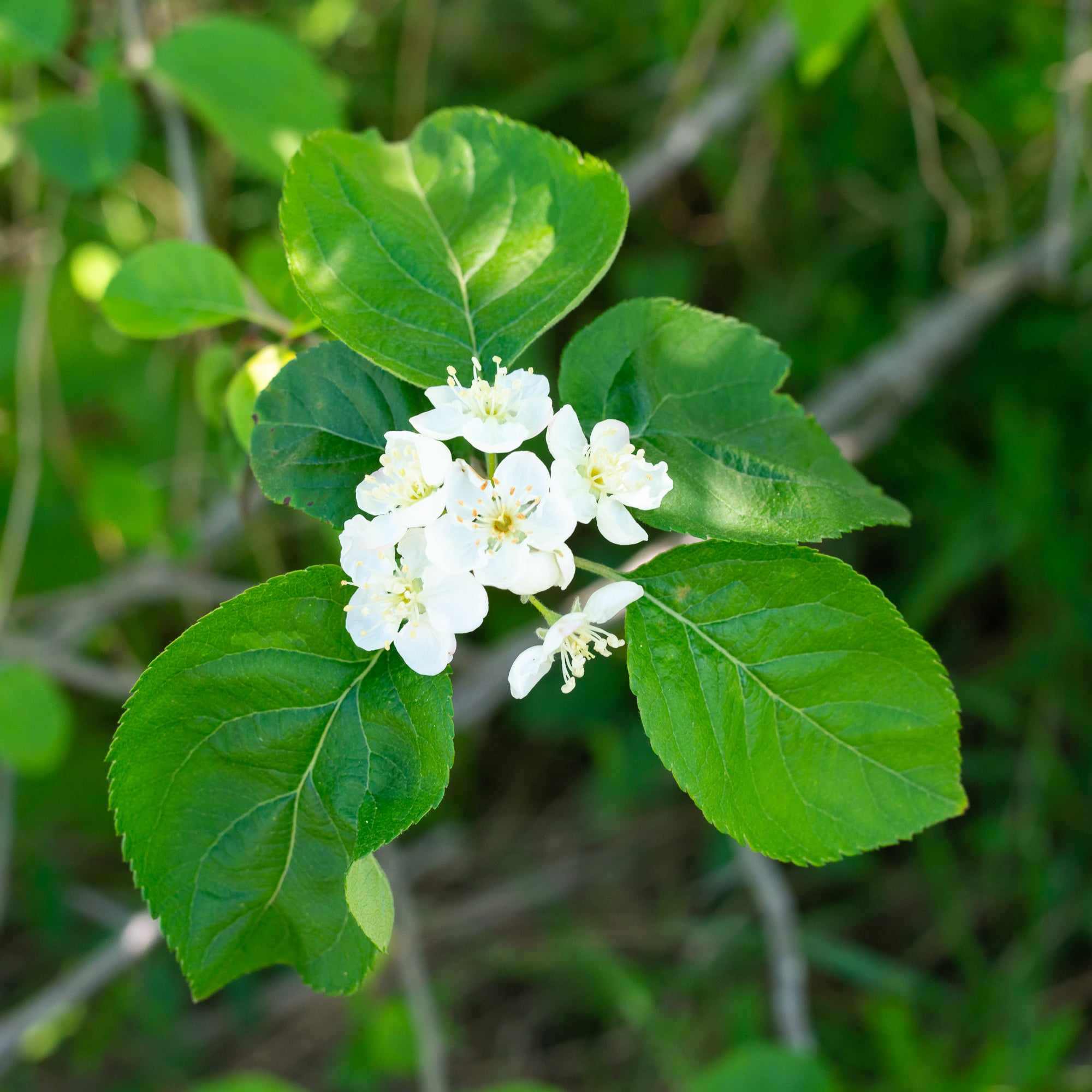
Pacific crabapple is a small tree that is both ornamental in the home landscape, and ecologically valuable in the wild. In spring, the leafy branches are adorned with prolific clusters of fragrant white flowers, which attract a host of pollinators and beneficial insects. By late summer, the flowers give way to small, yellow-red fruits, which persist into winter and provide a late-season food source for a large variety of birds. The crabapples are also edible to humans, although they are quite small, and tart until after frost. Pacific crabapple is a choice candidate for restoring wetland habitats, as well as for pollinator gardens, rain gardens, habitat hedgerows, and sunny areas of the garden with moist to wet soils.
Sun Exposure: Full sun to partial shade
Soil & Moisture: Moist to wet soil
Mature Size: 10'-30' tall
Bloom Time: Spring
Edible: Yes
Wildlife Value: Attracts beneficial insects and pollinators such as butterflies, bees, and hummingbirds. Fruits are eaten by birds, bears, and other wildlife. Provides good cover and nesting sites for birds.
Native Range & Habitat: Moist forests, estuaries, streambanks, riparian areas at low elevation. Native to the west coast from Alaska to California.
Other Names: Oregon crabapple, western crabapple
Choose options