
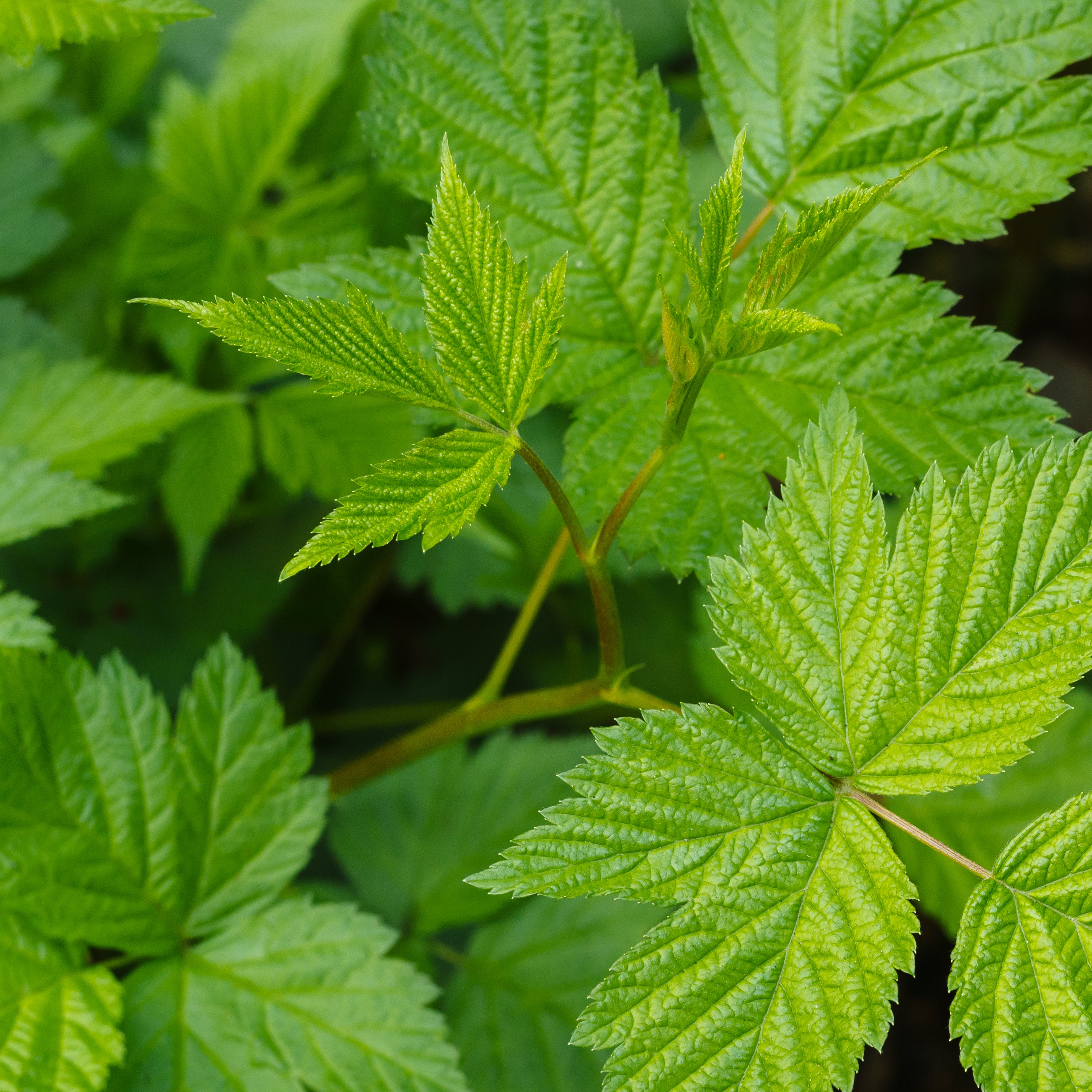
Salmonberry (Rubus spectabilis)
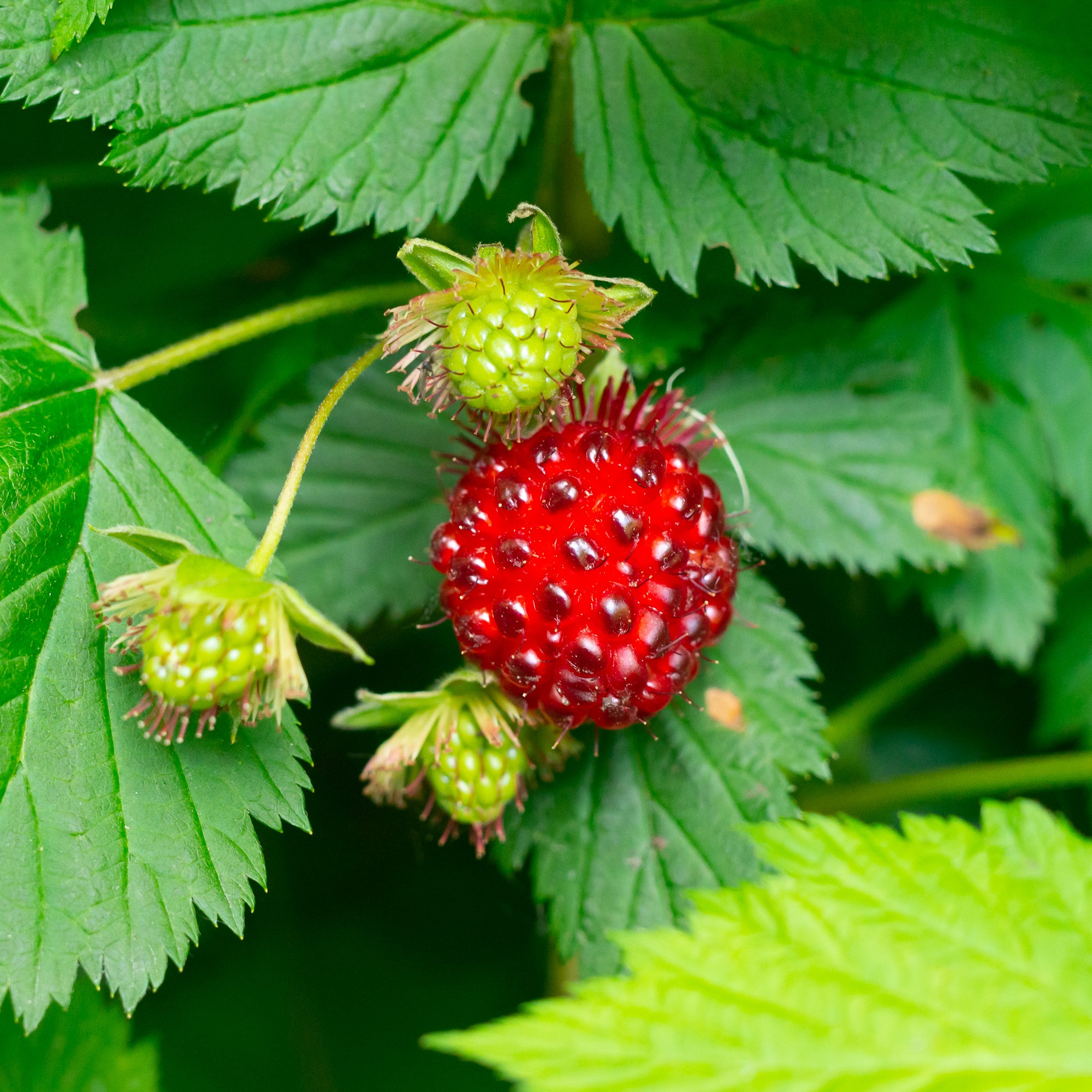
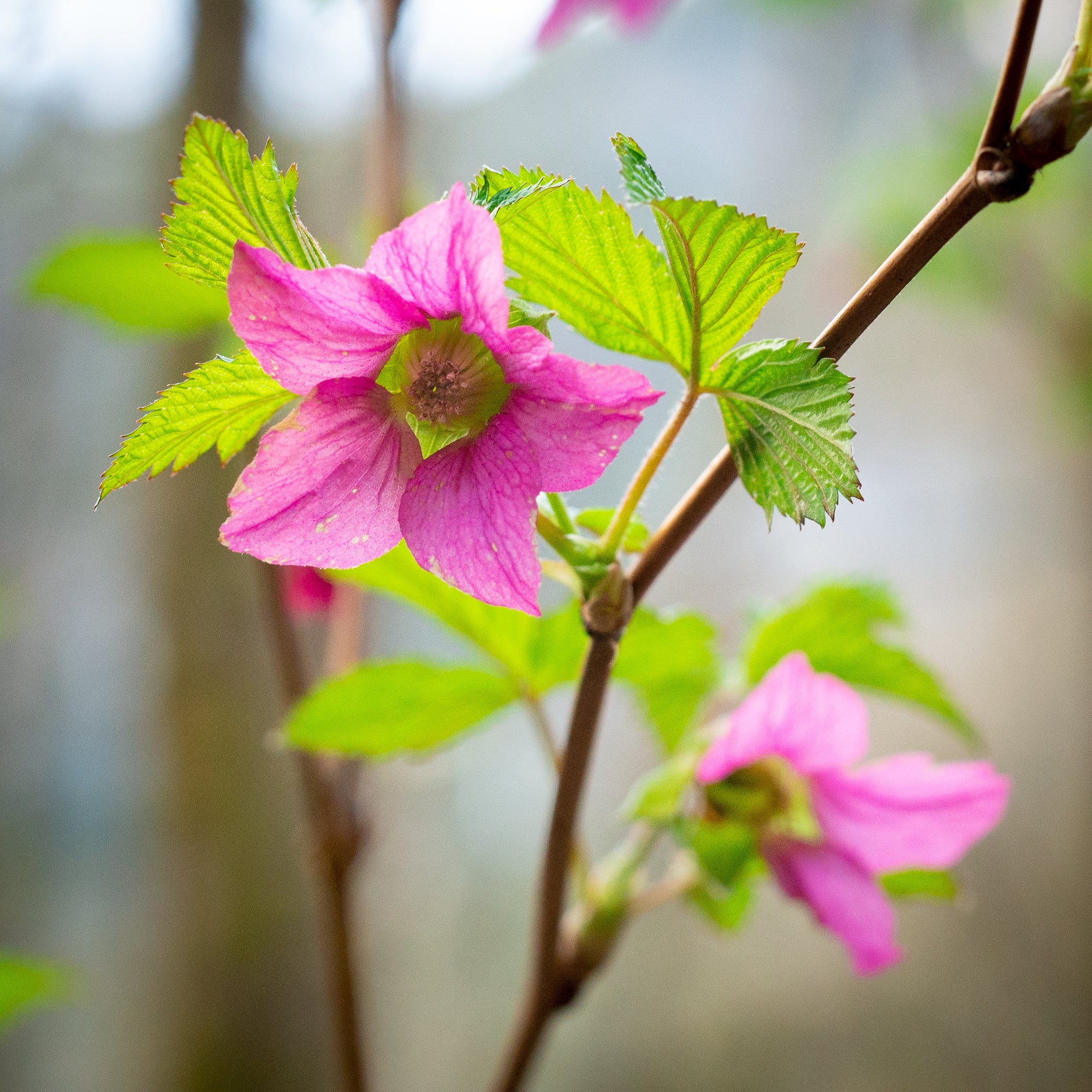
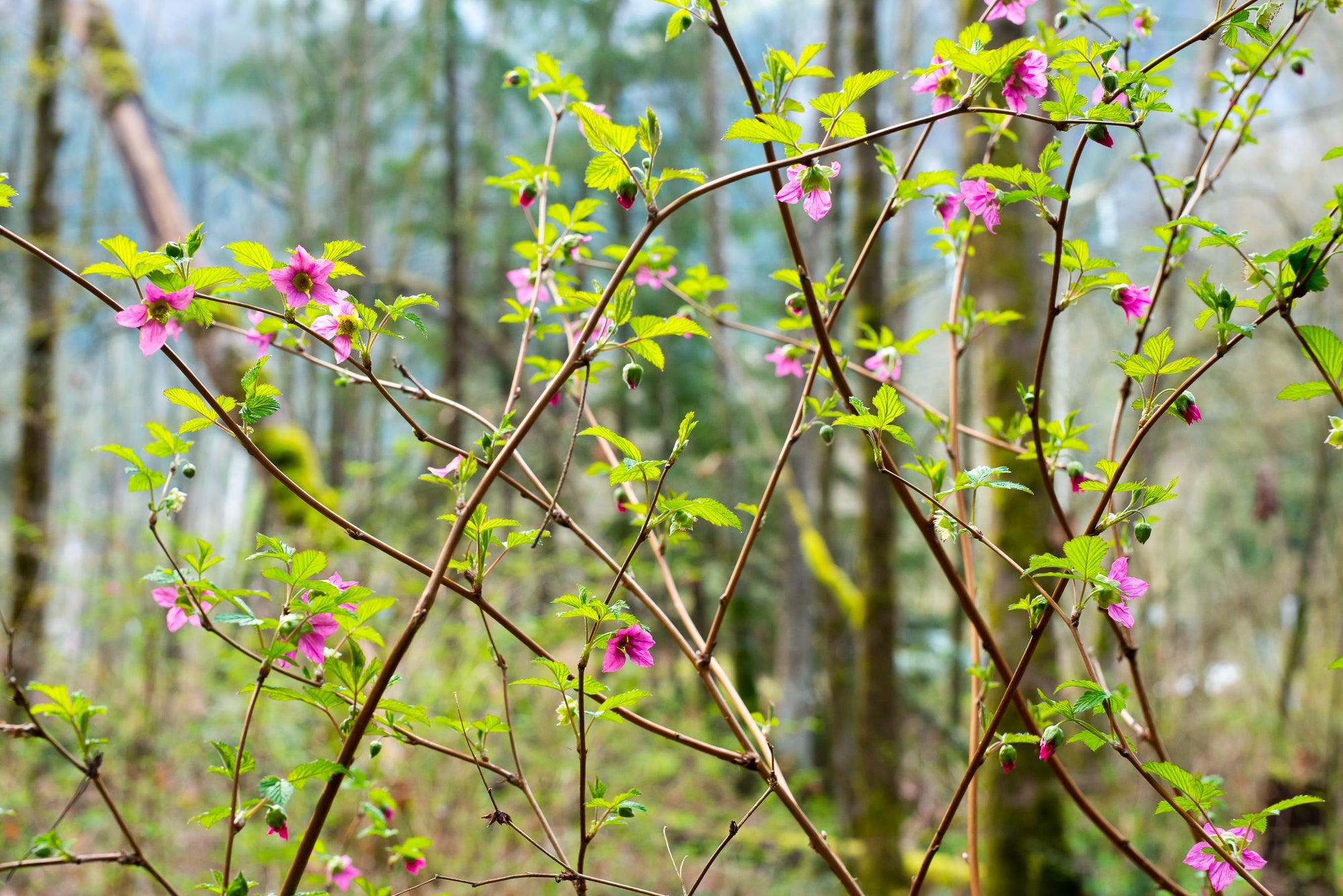
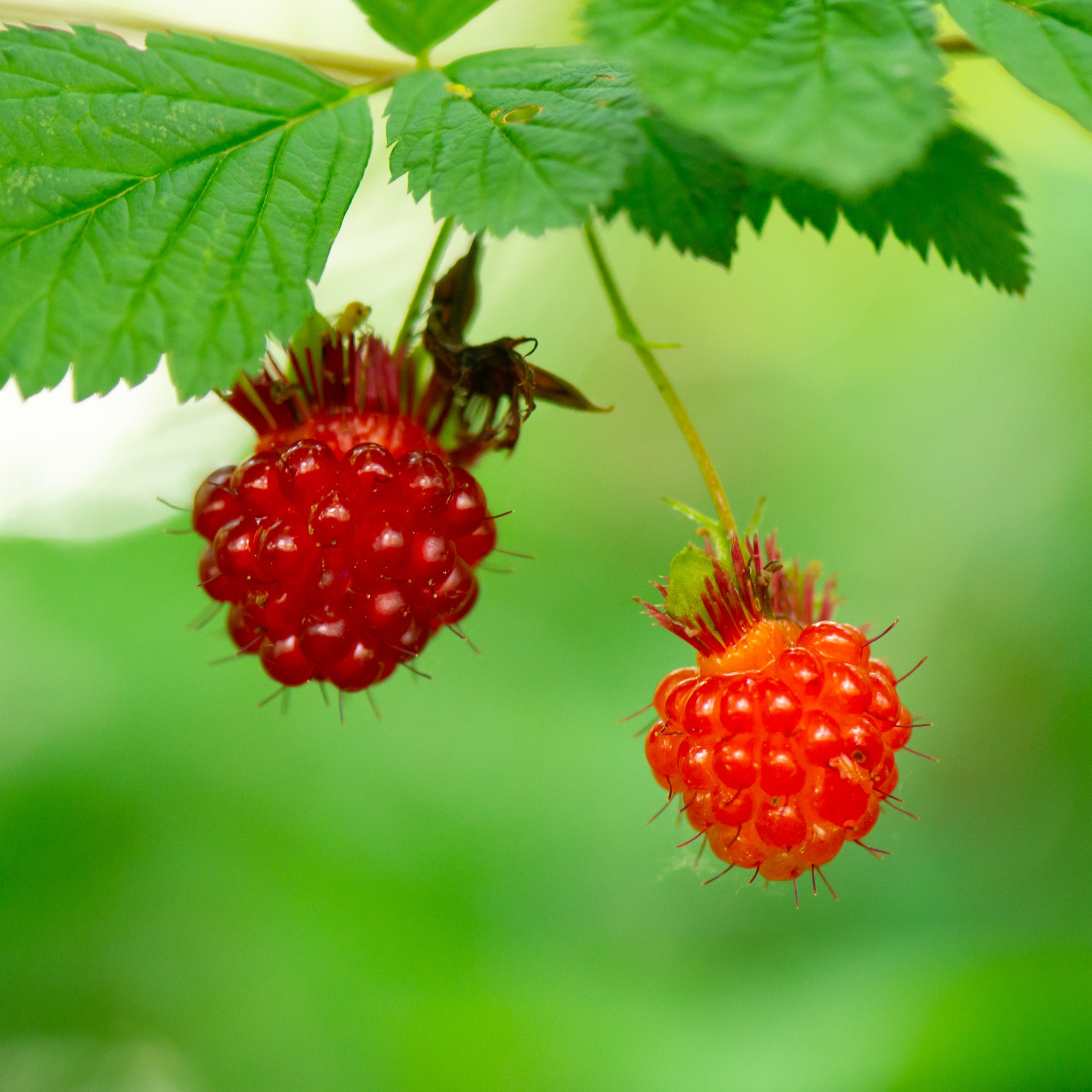
This relative of the raspberry is frequently found in moist and shady forests of coastal British Columbia. It is one of the first plants to flower in late winter and early spring, attracting pollinators to its cheerful purplish-pink blooms, which are followed by juicy edible berries that range in colour from golden orange to red and deep purple. Salmonberry shrubs can grow up to 12' tall, and like most Rubus species, they spread through rhizomes, so it's best planted in a wilder area of the garden where it has room to spread. Salmonberry is a great addition to food forests, rain gardens, and edible landscapes, and is excellent for restoration plantings in riparian areas.
Sun Exposure: Full shade, partial shade, full sun
Soil & Moisture: Moist to wet, humus-rich soil
Mature Size: Up to 12' tall, spreads by rhizomes
Bloom Time: Early spring
Edible: Yes (berries)
Wildlife Value: Attracts beneficial insects and pollinators including bees, butterflies, and hummingbirds. Moth host plant. Fruits are eaten by wildlife. Provides cover and nesting sites. Browsed by deer, elk, and other wildlife.
Native Range & Habitat: Moist forests, wetlands, and riparian areas, from low to middle elevations. Native to the west coast from Alaska south to California.
Other Names: yetwánay̓ (Sḵwx̱wú7mesh sníchim)
Choose options