
Saskatoon Berry (Amelanchier alnifolia)
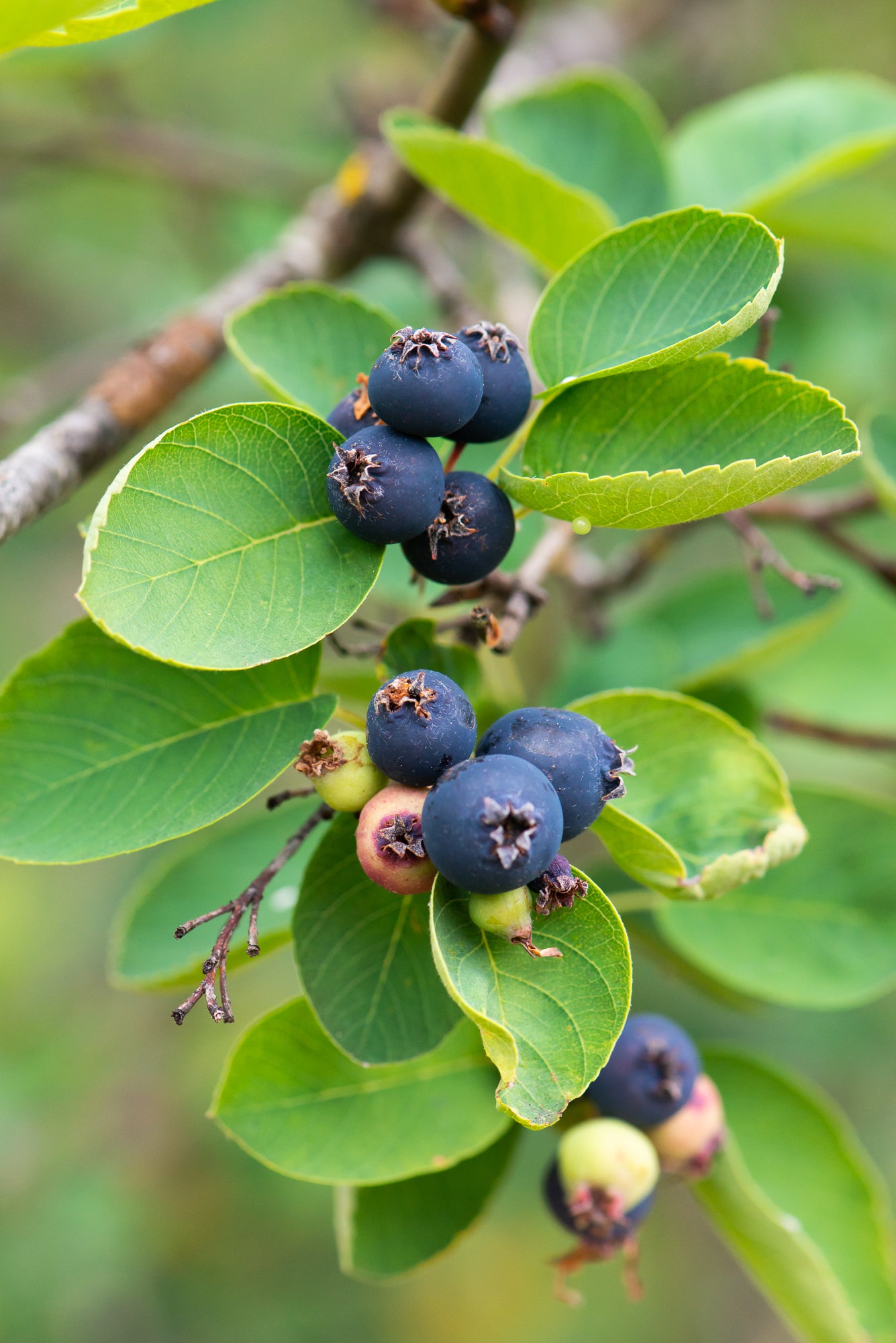
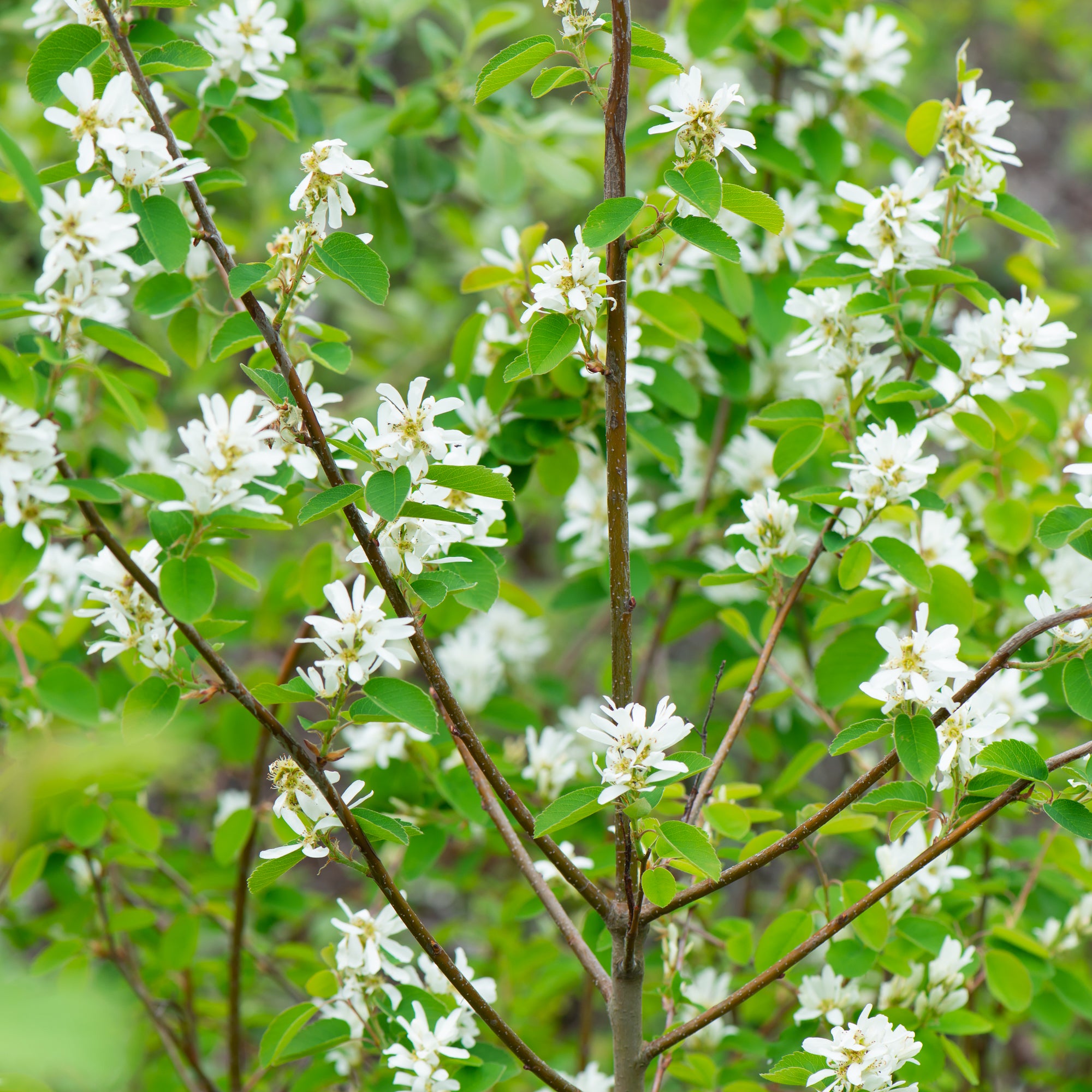
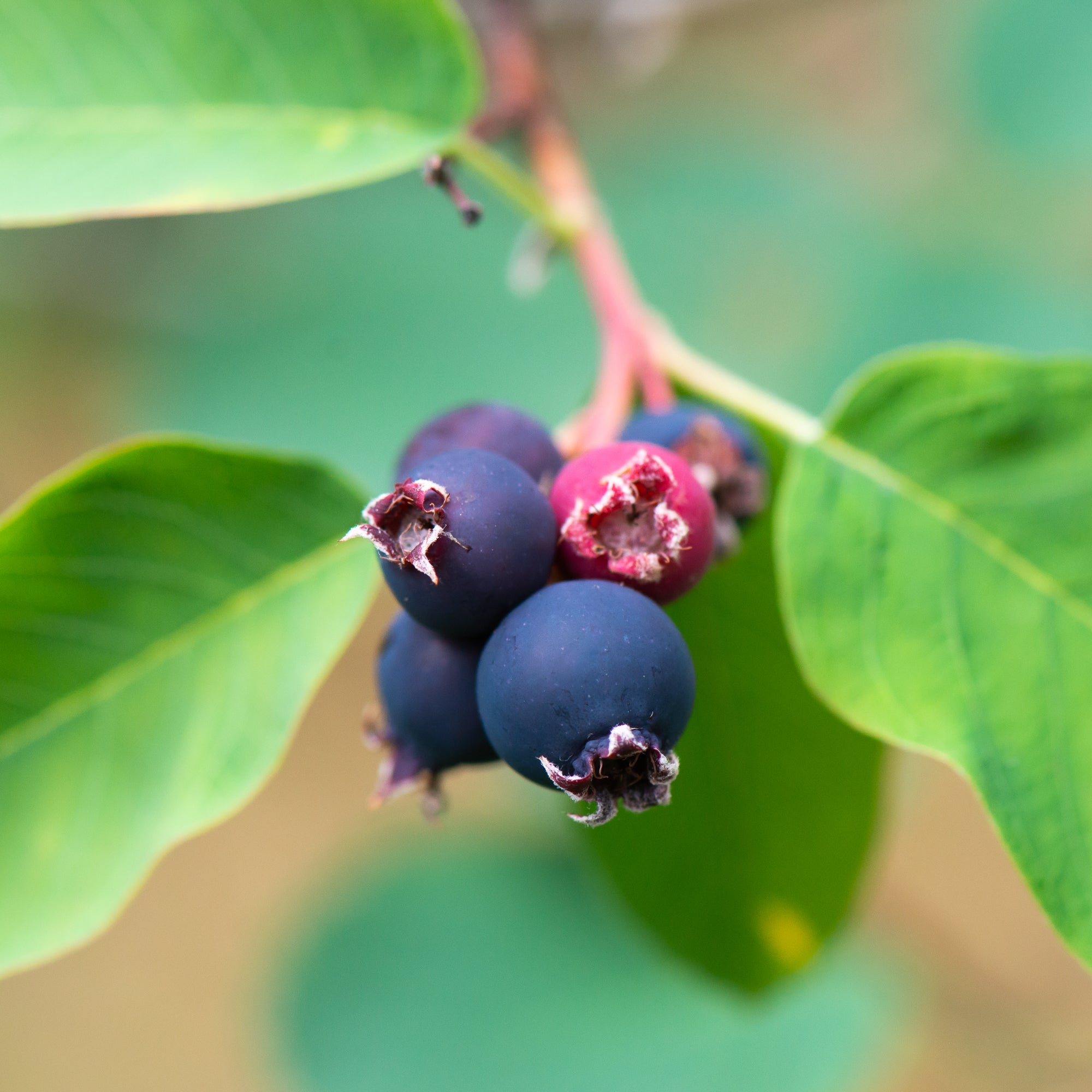
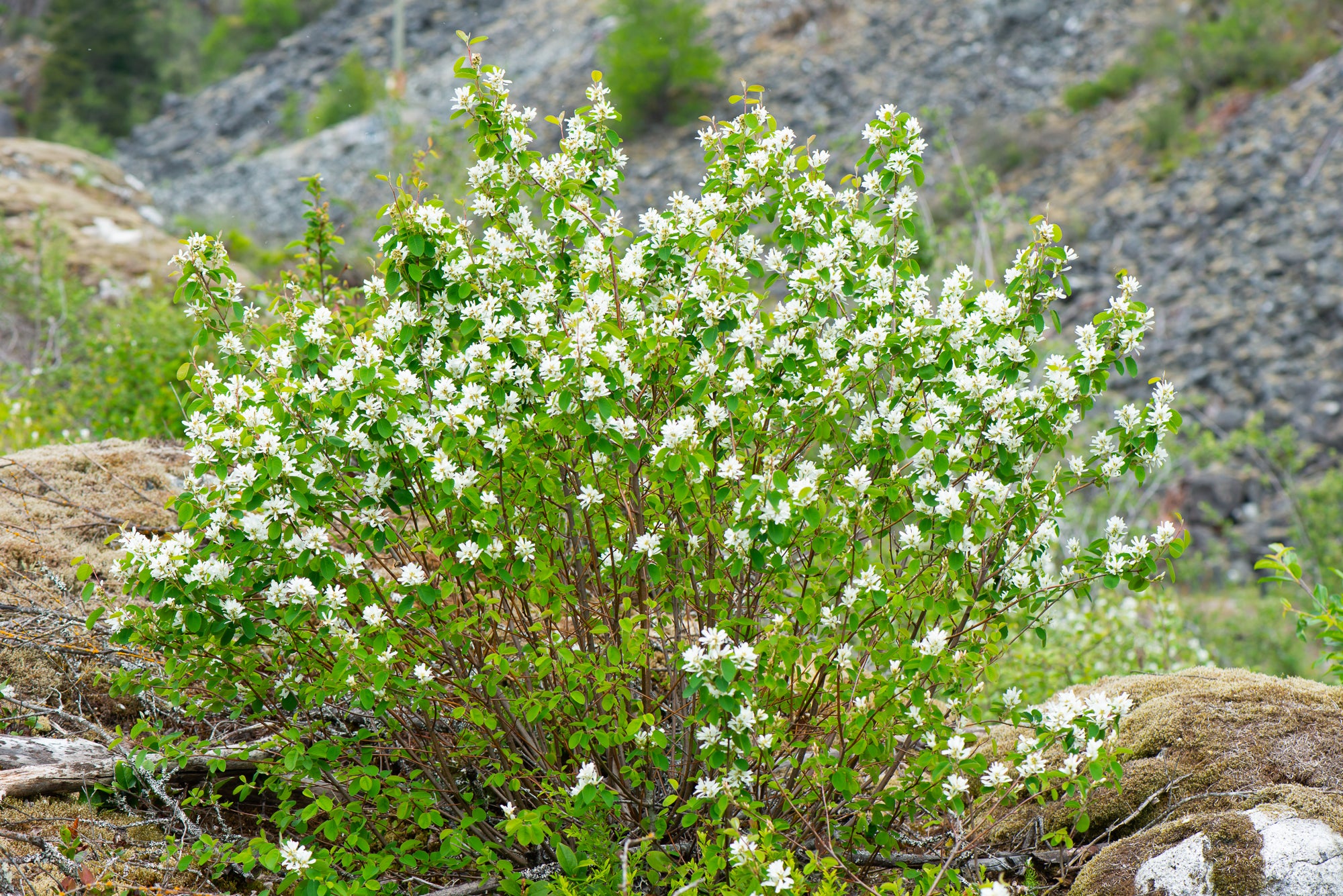
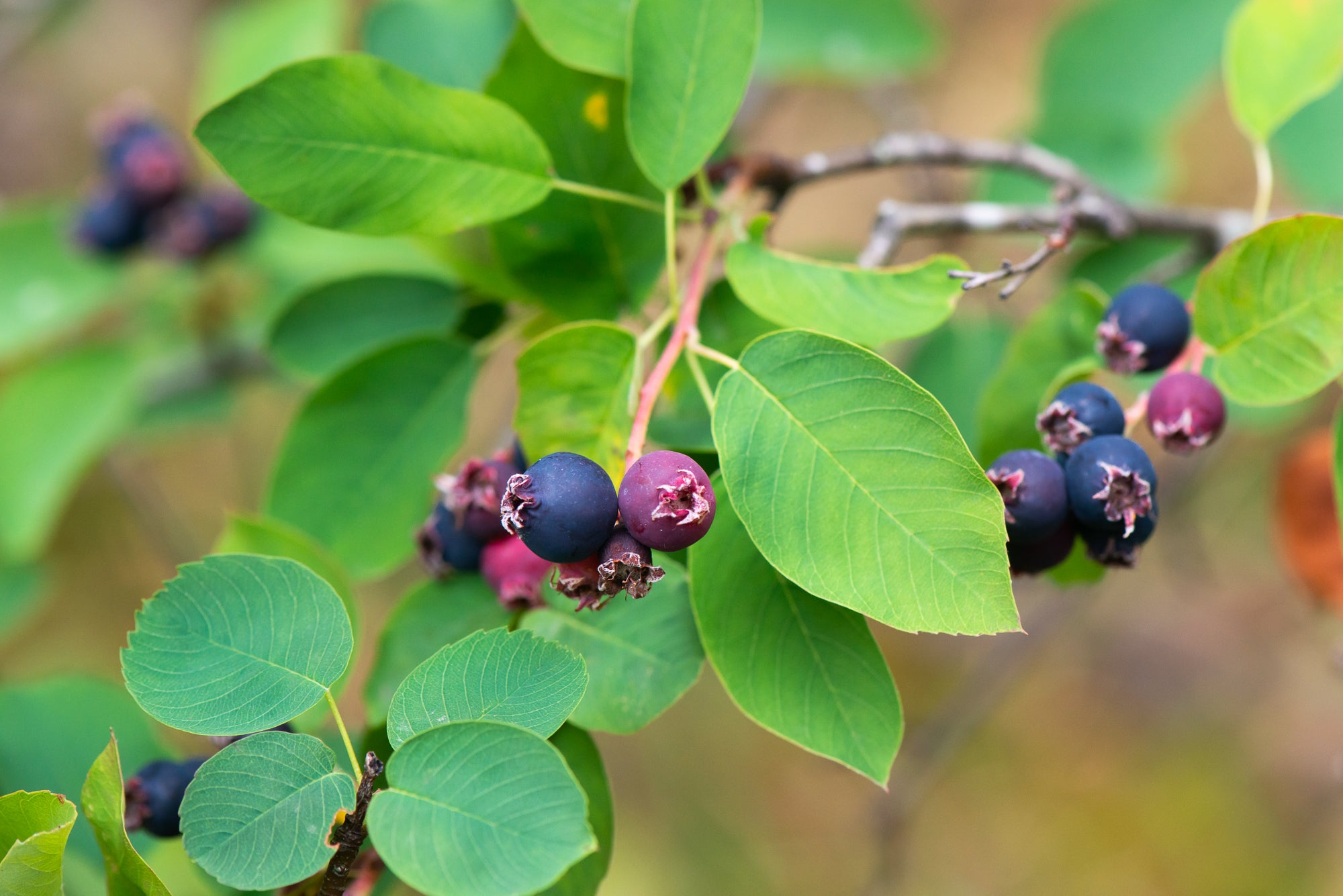
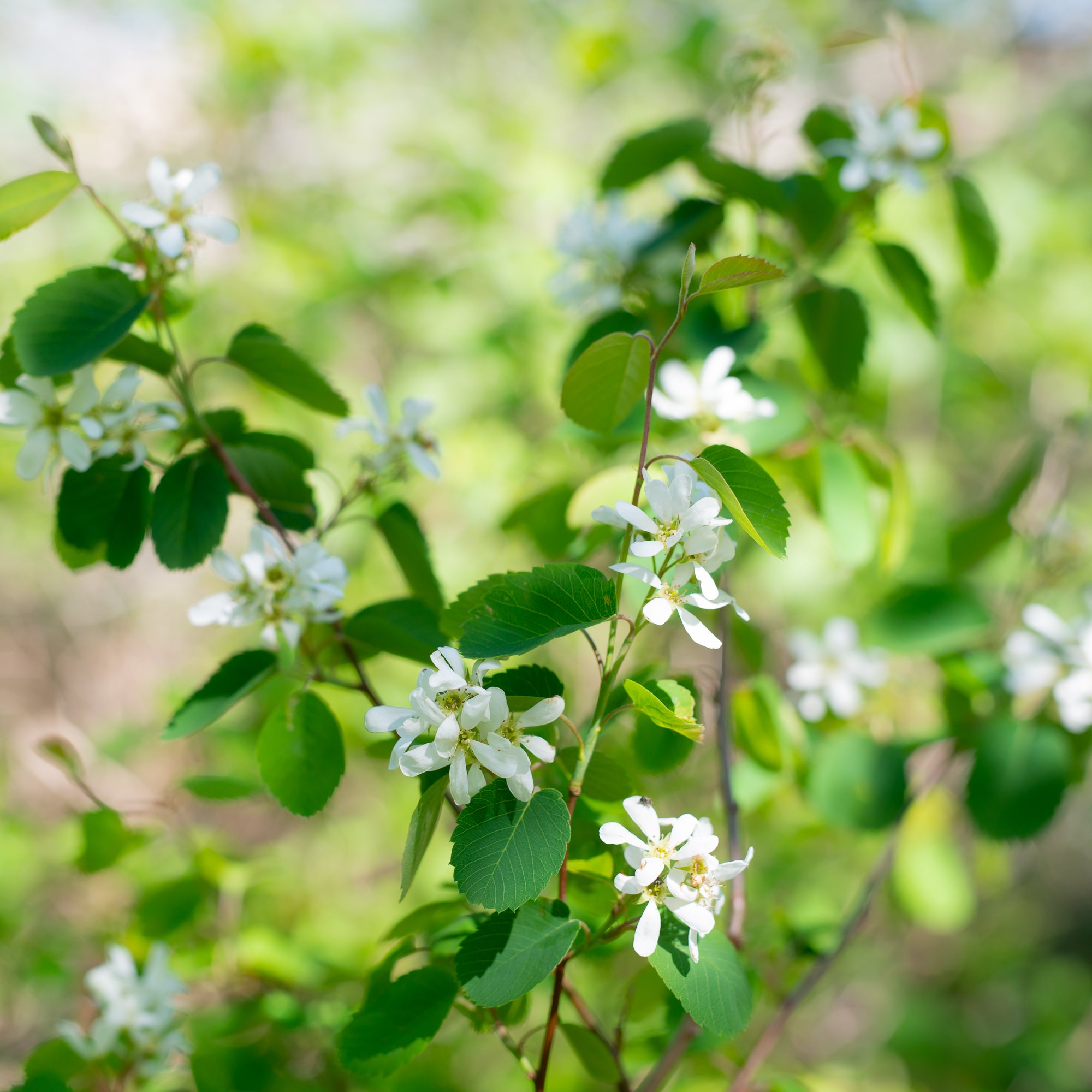
Saskatoon berry is a large deciduous shrub to small tree, typically with a broad, multi-stemmed habit, that has ecological, edible, and ornamental value. It is especially beautiful in spring, with compact clusters of white flowers abundantly covering its branches, and attracting a wide range of pollinators. In summer, the flowers give way to purplish-blue fruits that are highly nutritious, have a sweet nutty taste, and are enjoyed by both humans and wildlife. It continues to provide interest in the fall, when the foliage turns shades of yellow, orange, and red. Saskatoon berry is a great plant for hedgerows, food forests, and supporting pollinators, birds, and other wildlife.
Sun Exposure: Full sun to part shade
Soil & Moisture: Dry to moist, well-drained soil. Grows in a variety of soil types. Drought tolerant once established.
Mature Size: 5'-20' tall
Bloom Time: Spring
Edible: Yes (berries)
Wildlife Value: Attracts bees, butterflies, hummingbirds, and other pollinators. Butterfly and moth larval host. Provides cover and nesting sites. Fruits eaten by birds and other wildlife. Browsed by elk and deer.
Native Range & Habitat: Open forests, meadows, coastal bluffs, and hillsides, from low to high elevations. Widespread across much of Canada and northwestern United States.
Other Names: Western serviceberry, juneberry
Choose options