
Utah Honeysuckle (Lonicera utahensis)
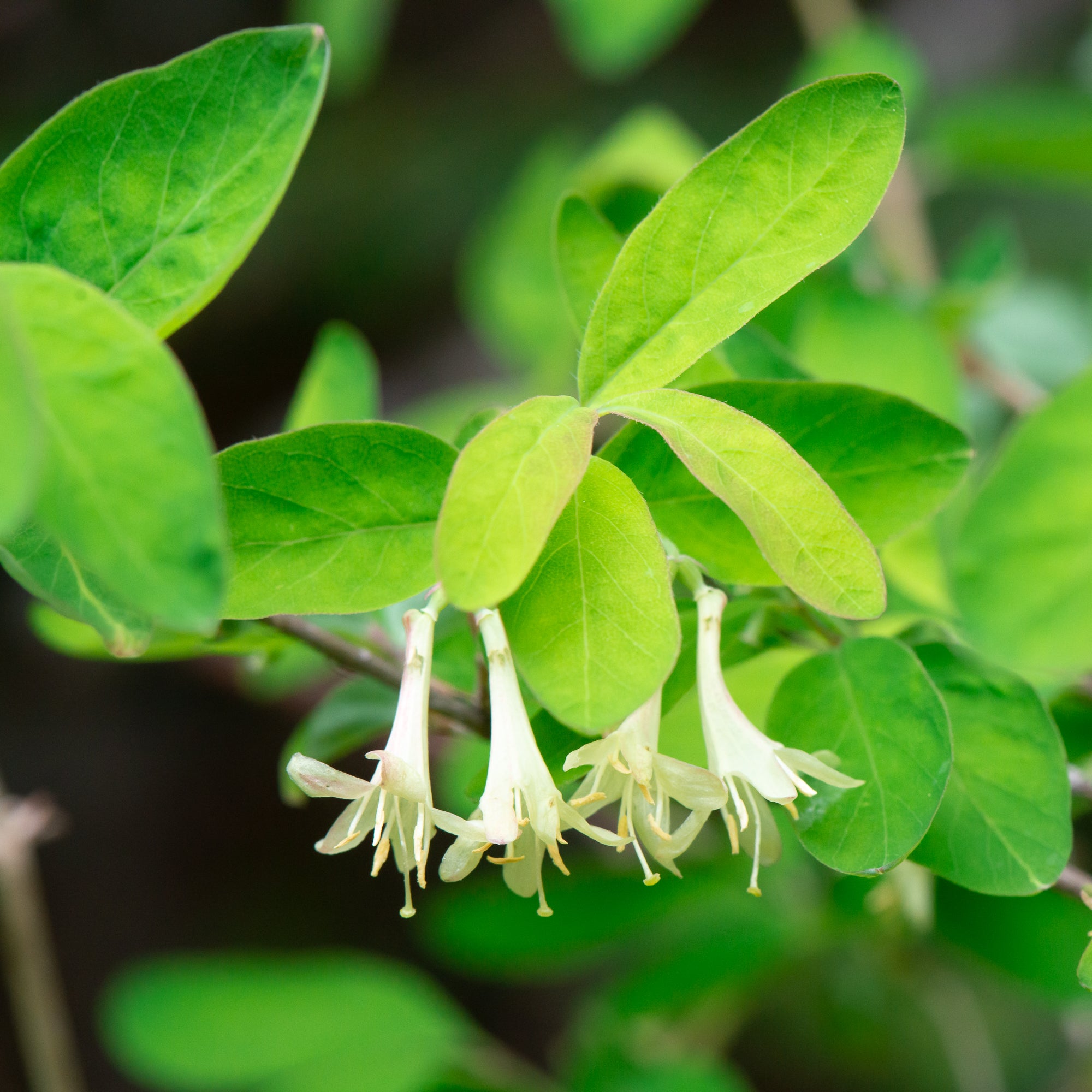
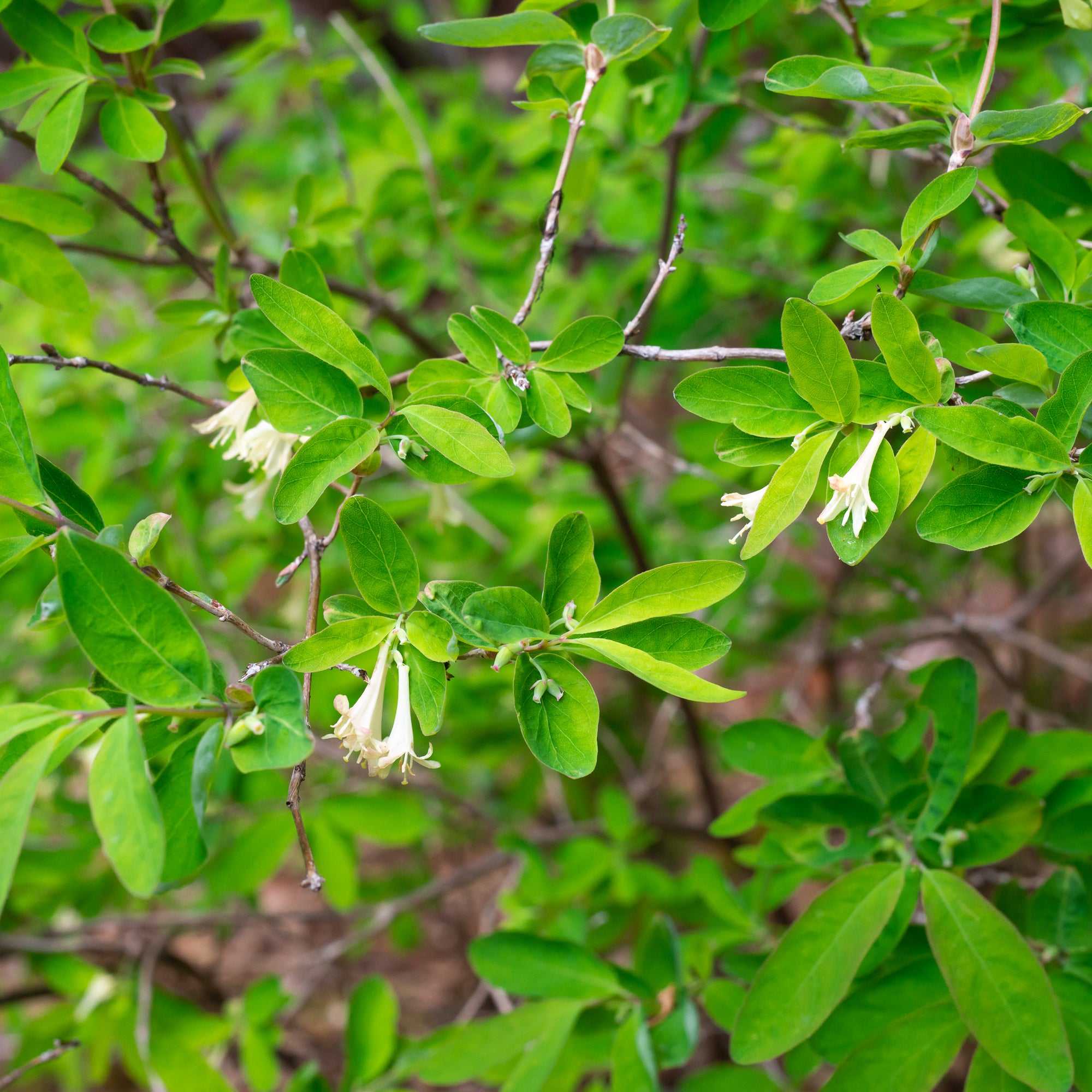
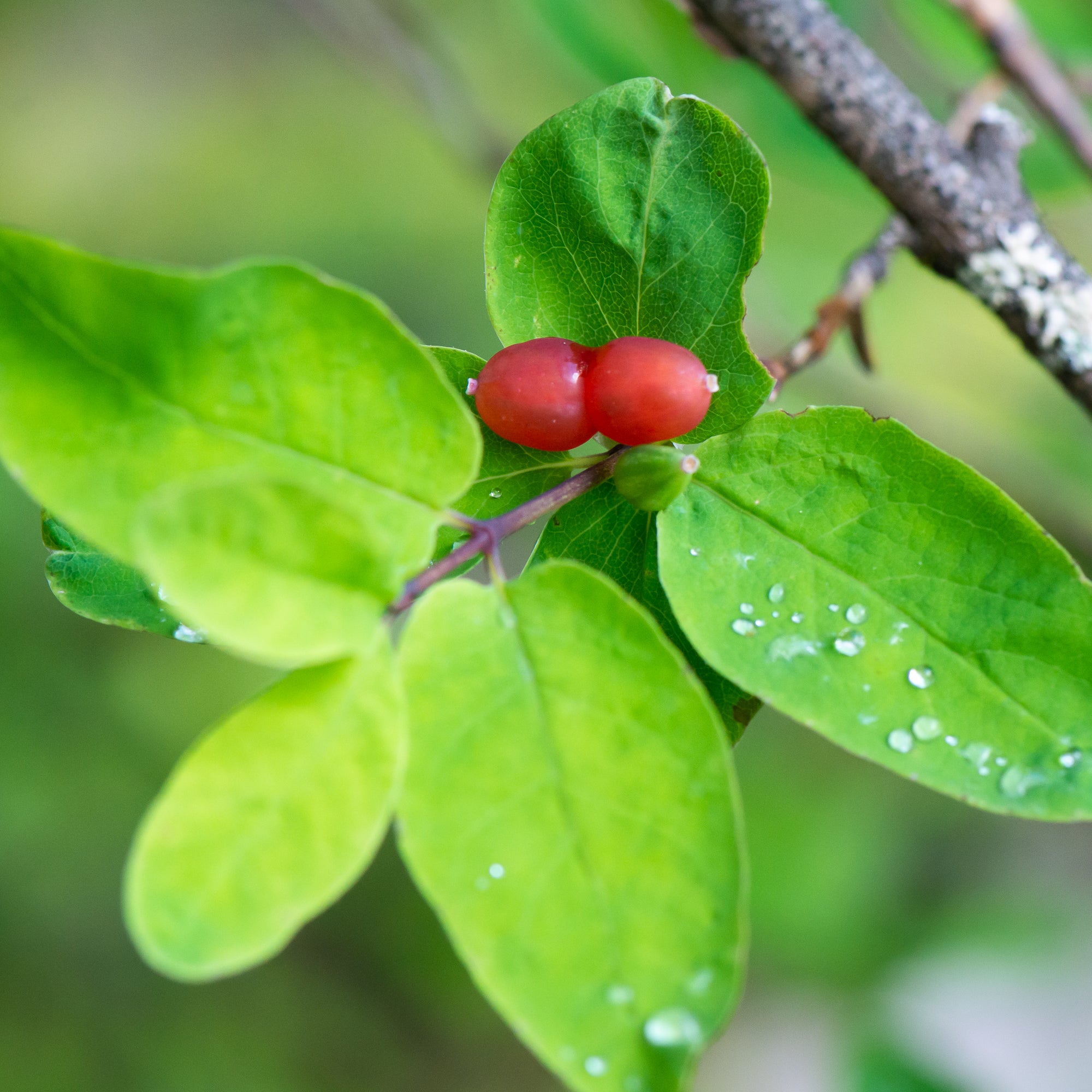
Also known as red twinberry, utah honeysuckle is a small deciduous shrub of moist montane forests. It forms clumps of slender spreading branches, with bright green rounded leaves. Pairs of fragrant, creamy white, funnel-shaped flowers bloom in the spring, attracting hummingbirds, bumblebees, and other pollinators. The flowers are followed by pairs of vibrant red berries, which are not considered edible to humans, but are loved by birds and other wildlife. Thanks to its fibrous root system, utah honeysuckle is excellent for erosion control on moist slopes and streambanks.
Sun Exposure: Partial shade to full sun
Soil & Moisture: Moist, well-drained soil
Mature Size: 2'-7' tall
Bloom Time: Spring to early summer
Edible: No
Wildlife Value: Attracts beneficial insects and pollinators such as hummingbirds and bumblebees. Berries are eaten by birds and mammals. Provides cover.
Native Range & Habitat: Coniferous forests, streambanks, meadows, and riparian areas from low to high elevations. Native to western North America from British Columbia and Alberta south to California.
Other Names: Red twinberry
Choose options