
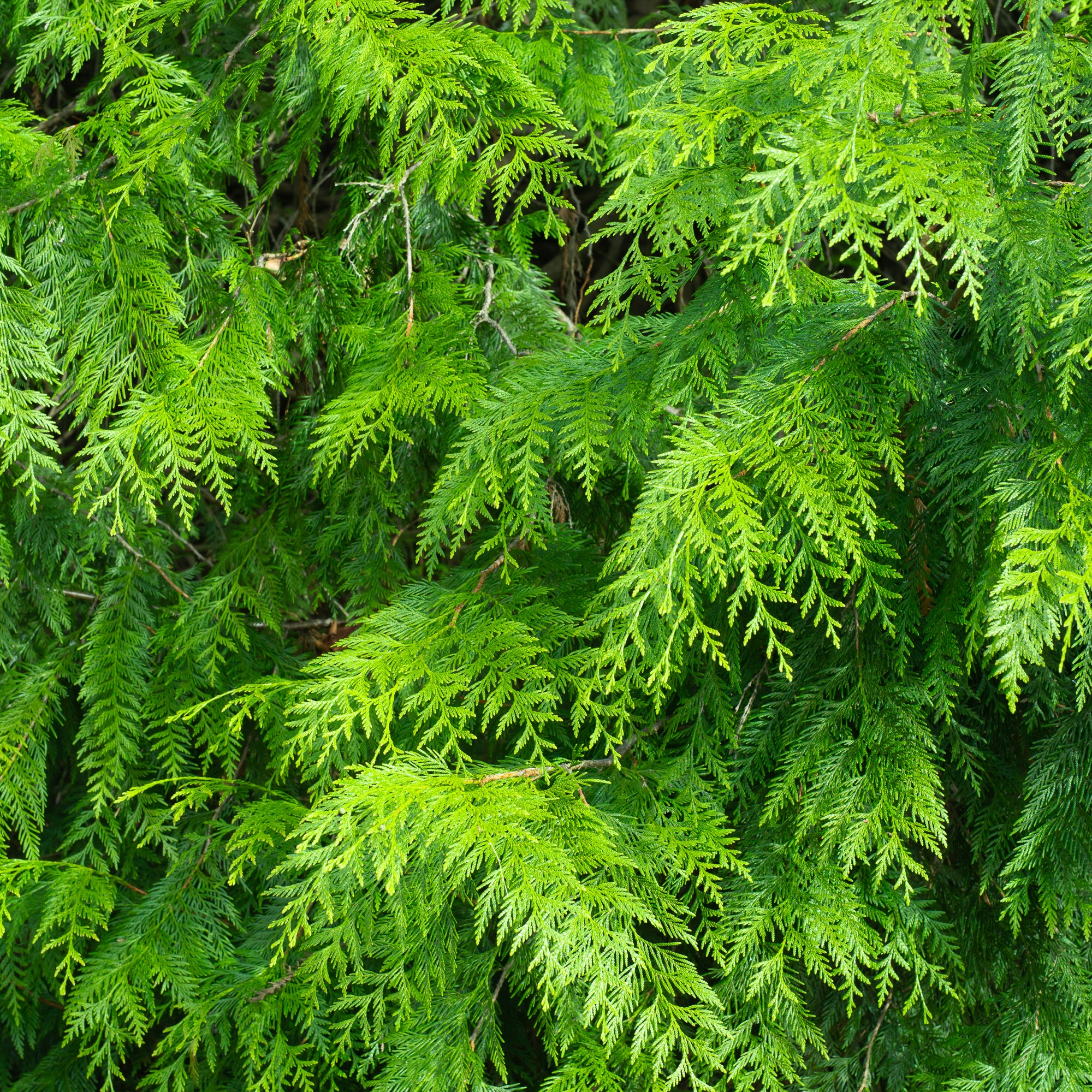
Western Red Cedar (Thuja plicata)
Western red cedar is widely recognized as one of the evergreen giants of our coastal forests, living up to 1000 years or more, and is culturally significant to many Coast Salish peoples. It is beautifully structured, with textured reddish bark, gracefully curved lower branches and flat sprays of fragrant evergreen foliage. Although it eventually grows into a very large tree, western red cedar is versatile and valuable as an ornamental tree in the home landscape, grown as a specimen or planted closely together and pruned to create a hedge. It is shade tolerant, and prefers moist, rich soils.
Sun Exposure: Full sun to part shade
Soil & Moisture: Moist to seasonally moist, humus-rich soil
Mature Size: 75'-150' tall, sometimes taller
Bloom Time:
Edible: No
Wildlife Value: Seeds are eaten by birds. Butterfly and moth host plant. Provides cover and nesting sites. Browsed by deer and elk.
Native Range & Habitat: Coastal forests from low to high elevations. Native to western North America from Alaska, south to northern California and east to Montana.
Other Names: x̱ápay̓ay (Sḵwx̱wú7mesh sníchim)
Choose options